
秦时明月
Is the rapid growth of China’s emerging industries driven by industrial subsidies?: People’s Daily_我的网站

一 |
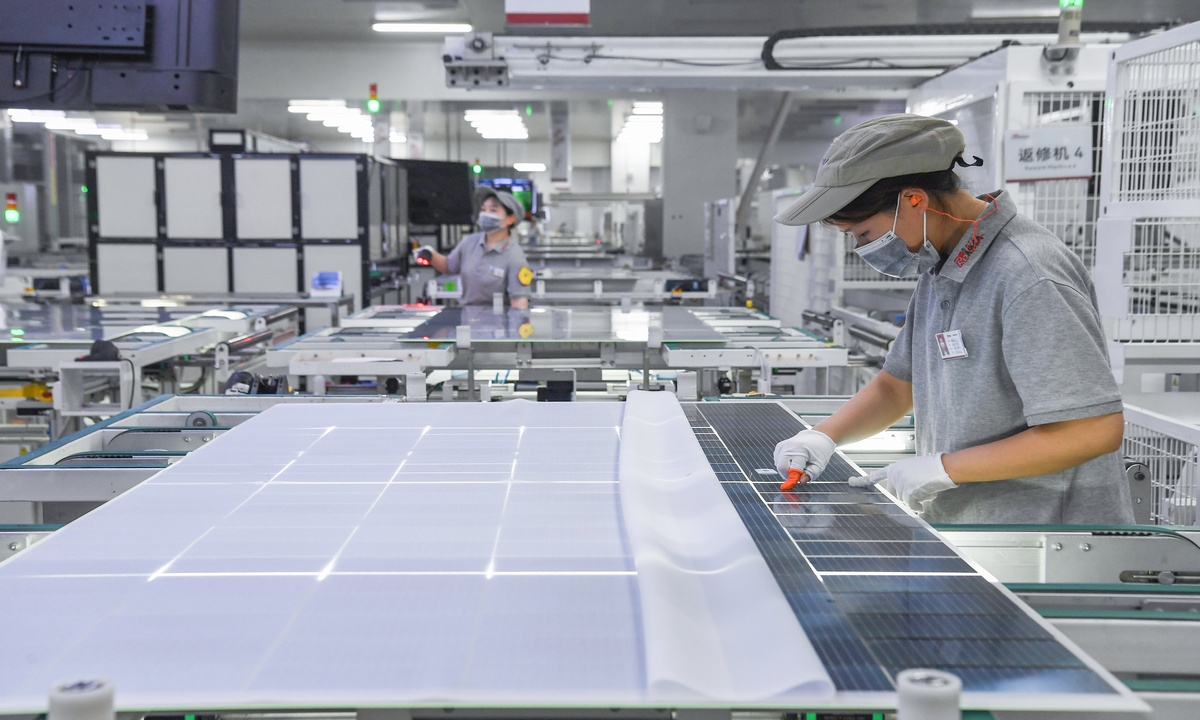
China saw robust exports in electric vehicles (EV), lithium batteries and photovoltaic products, known as the "new three," in the first half of this year. More notably, robotics, artificial intelligence (AI) and innovative drugs, which represent the future direction of industrial development, are also emerging as new calling cards for China's foreign trade.
However, the impressive performance provoked unease among some Western media outlets and politicians. Some have deliberately portrayed China's rapid industrial development and strong competitiveness as a result of government subsidies, pushing the false claim that subsidies have created overcapacity and those low-priced Chinese products are flooding global markets. Such fallacies, which simply equate industrial subsidies with overcapacity, are not only logically flawed but also factually groundless.
In practice, many countries adopt industrial policies tailored to their national conditions and development needs, such as providing research and development (R&D) subsidies for emerging industries and risk related subsidies for agriculture.
Well-designed industrial subsidies can help address market failures, promote technological innovation and environmental protection, reduce poverty and support balanced development, rather than cause so called "overcapacity."
Multiple reports by the United Nations Conference on Trade and Development have noted that the number of industrial policies worldwide has grown rapidly over the past five years, with R&D subsidies, tax incentives and low interest loans for emerging industries becoming common international practices.
Forcibly linking industrial subsidies to "overcapacity" is, in essence, a political manipulation based on double standards. The US, for example, plans to provide $750 billion in various subsidies from 2022 to 2031 under its Inflation Reduction Act. Subsidized EVs are subject to requirements such as production and sales in the US or North America, effectively excluding other WTO members. US industrial subsidies for AI are even greater than those of all other countries combined.
Similarly, according to incomplete statistics, the European Commission is expected to provide more than 1.44 trillion euros ($210 billion) in various subsidies between 2021 and 2030. The EU's Industrial Accelerator Act links local content directly to financial support through "Made in EU" requirements, creating serious investment barriers and institutional discrimination.
Have these massive subsidies been labeled as causing "overcapacity"? The answer is no. While claiming that China's industrial subsidies lead to so-called overcapacity, these countries are themselves providing massive subsidies to their own industries. Such double standards amount to selective accusations targeting China, aimed at politicizing trade and economic issues and weaponizing industrial policy.
At a deeper level, accusations that "China's industrial subsidies cause overcapacity" are merely a pretext, reflecting growing anxiety and fear over the rising competitiveness of Chinese industries.
Looking back at the repeated hype in Western media, the criticism has consistently targeted China's most globally competitive industries, including new-energy vehicles, photovoltaics and power batteries. This exposes the real intention of shifting the blame for their own lagging industrial development onto China while stepping up restrictions against Chinese industries.
China's breakthroughs in these industries have been driven by advances in homegrown technologies, complete industrial and supply chains, and robust market competition, rather than by policy subsidies as some have claimed.
In recent years, China has taken multiple steps to regulate and improve its subsidy policies, from reviewing and correcting inappropriate local subsidies to exploring a unified negative list mechanism for local fiscal subsidies. China applies subsidies equally to all market entities, including foreign invested enterprises, strictly follows WTO rules, and continues to improve the compliance, effectiveness and transparency of its subsidy policies.
Rather than fabricating and hyping baseless claims about subsidies and obsessing over building trade barriers, certain Western media outlets and politicians should focus on addressing their own weaknesses and increasing investment in research and development. They should embrace healthy market competition with an inclusive mindset, promote mutual benefit through greater openness, and win markets and drive progress through genuine innovation.
This was compiled and translated by the Global Times English edition based on an article published in the "Chisu Jinsheng" economic commentary column of the People's Daily on August 10, 2026.
。 Colombo, Oct 20 (UNI) Amid growing criticism, Sri Lankan President Ranil Wickremesinghe has justified a hike in income tax for both corporates and individuals, saying it was for the greater good of the country and critical to garner much needed financial support from the international community.
In an address to the nation, the President said the International Monetary Fund (IMF) with which the government has signed a Staff Level Agreement for a $2.9 billion four-year financial support, advised the need for a surplus in Sri Lanka’s primary budget, the Daily FT reported on Thursday.
“It was agreed to since the country needs the support of the IMF,” he was quoted him as saying.
“It was also decided to increase the country’s income from 8.5 per cent to 14.5 per cent of the GDP. However, it is a difficult task to accomplish immediately, it is envisaged to achieve this by 2026.
"Initially, a decision had to be taken on the manner in which the income is to be increased. Money was printed due to the decrease in income. During the past two years, Rs. 2,300 billion has been printed, resulting in inflation rising to 70-75 per cent and even more in respect of food inflation," he said.
Wickremesinghe said these increases need to be controlled, while securing income. Therefore, during the discussions with the IMF a new tax system was proposed. The IMF informed that even the export industries would be required to pay taxes.
The IMF pointed out that in countries with an export economy, the related industries were liable for tax. The IMF also upheld that Sri Lanka’s primary export economy is based on the plantation industry.
During British rule, taxes were charged from every plantation sector, including tea, coconut and rubber. Therefore, if the country has to move towards that goal, taxes will have to be paid. The export sector has now questioned this aspect and the related concerns are to be submitted to the IMF.
Referring to the issue of higher personal income taxation, the President said the majority of tax revenue was through indirect taxation. The majority of the country’s citizens, even those below the poverty line, had no choice but to pay indirect taxes, the President said.
The direct tax revenue was 20 per cent and 80 per cent has been derived from indirect taxes.
The IMF had reservations in this regard and said the amount of tax obtained through direct taxes should exceed 20 per cent. The IMF noted that otherwise this would not be successful and ordinary citizens would need to pay taxes, the President said.
Therefore, the Treasury and the IMF discussed the possibility of limiting the taxation from those who have an income of Rs. 200,000, which did not materialise. Eventually, this resulted in the decision to levy income tax on people earning over 100,000. This has become a vital concern amongst citizens.
But without this tax system, the desired goal will not be achieved. The agreed goal is to achieve 14.5-15 per cent of Gross Domestic Product (GDP) revenue by 2026, Wickremesinghe said.
If Sri Lanka withdraws from this programme, IMF assistance will not be received. Without IMF certification, the support of institutions such as the World Bank, Asian Development Bank, and the countries that have supported financially will not be forthcoming. Then, Sri Lanka will be back to the era of queues, he warned.
In his address, Wickremesinghe also said the Government was ready to implement prudent economic management after successful debt restructuring.
He noted that it was not possible to strengthen the economy without increasing the revenue of the country, which will compel him to reluctantly make tough decisions in order to rebuild the nation.
The President pointed out how in November 2019, the country’s taxes were drastically reduced, reducing the government revenue to 8.5 per cent. This was when the IMF set aside the agreements with Colombo and declared that it was unable to provide the agreed assistance.
"That year the government lost approximately Rs. 600-700 billion as revenue. Simultaneously, the country had to face the Covid-19 pandemic. These issues are the main factors that led to the collapse of Sri Lanka’s economy.
"The country at this juncture is facing a difficult period. Expectedly tough decisions have to be taken during these difficult times. I undertook this challenge when no one else was willing to come forward."
UNI MR。
Current article:http://s3iv3s7.shengyaodanrongchui.buzz/news/20260826_6080518.html
Published on:18:56:31
栏目相关
- U18男篮主帅王建军:亚洲杯亚军只是一个开始
- 两岸专家福建三明共探精致农业与乡村融合新路径
- 特朗普下狠手:汽车关税直接翻倍到50%!
- Telecom Operators in Pakistan Warn Gov't About Internet Shutdown Due to Power Outages
- 市政府就《政府工作报告》征求社区书记意见建议
- 据传苏塞克斯公爵夫人梅根·马克尔将重返演艺圈
- 做广发期货,怎么选开户渠道才能拿到合理费率
- RTX 5080为何大受欢迎?网友很无奈:实在没得选!
- 潮讯:苹果将推出iPhone月租服务;真我国内全线产品已停产;OPPO、vivo拒绝三星新一季度存储报价;耐克将清退中国数千家在线经销商
- Lexus लाई नई स्मार्ट ओनरशिप प्लान; अब ES, NX और RX खरीदना हुआ और भी आसान
- Major US pharmacy chain Rite Aid files for bankruptcy
- PM to inaugurate Kisan Samman Sammelan on Monday
热门排行
- 偷税超300万被罚后,初代网红温婉 “复活”:制售高仿大牌服装,近百个号带货超百万元
- 涓涓流推出自主视频社交产品“多闪”,界面抢占先机
- हेमंत सोरेन ने दुर्घटनाओं में मारे गए तीन कर्मियों के परिजनों को सौंपे एक-एक करोड़ रुपये के चेक
- 12月12日起开通!我市新增两条免费旅游公交专线……
- 【旗研共进】“同”聚智慧,“异”起成长
- 建昌县境内发现一处明清时期辽西古道遗址
- “船搭船”助力“闽造”船舶驶出“加速度”
- 苹果正在考虑完全放弃自动驾驶仪项目的消息。
- 近十年我国用水总量基本保持平稳,水旱灾害防御能力整体性跃升_河湖_流域
- 中国热梗出海!西班牙肯德基玩梗《牛来》,门店贴魔性手绘海报引热议
- 点亮困境儿童的夏天 “福泽潇湘 峰伴成长”夏令营快乐起航
- Kansas Voters Reject Amendment to Strip Abortion Rights From State Constitution By Nearly 2-1 Margin